Neues aus der TU

News of Technische Universität Darmstadt

We apologize for not being able to present all of our news in English. Please find a selection of the most important news below. To see all news, please visit our German website.

  • 2013/05/13

    Half Time for PRORETA 3

    Continental hands over research vehicle

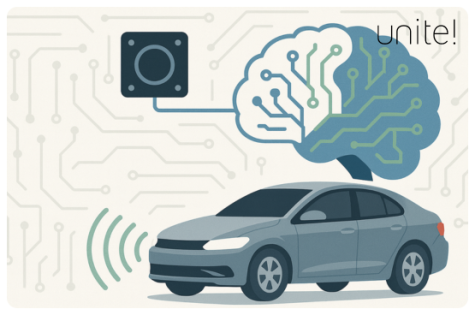
    Handover of research vehicle to Technische Universität (TU) Darmstadt by Continental takes the PRORETA 3 project into its second half. As part of the third collaborative PRORETA research project, TU Darmstadt and the international automotive supplier have been working for around two years on an integrated driver assistance concept for avoiding accidents and mitigating the consequences of accidents in urban traffic scenarios. go

  • 2013/05/02

    The mobile telephones of the future

    Future Internet research cluster present roadmap

    The mobile telephones of the future will be able to see, shrink while becoming larger, and slip into their users’ skins. That terse statement summarizes the recently released results of a thorough look at the next ten to fifteen years of mobile telephony by the Technische Universität Darmstadt’s “Future Internet” research cluster. go

  • 2013/03/15

    Well-Tempered Lighting

    Emitting much more light for less electric-power dissipation

    Scenarios for the optimal employment of light-emitting diodes for lighting purposes are being investigated at the TU Darmstadt’s Institute for Lighting Technology. The focus is on human perceptions, wellbeing, and health. go

  • 2013/01/21

    Facebook makes users envious and dissatisfied

    Study reveals a colossal role of facebook in users’ emotional life

    Participation in social networks, such as Facebook, can cause negative feelings and reduce members’ life satisfaction. Those are the results of a survey with nearly 600 Facebook users by Information Systems scientists at the TU Darmstadt and the Humboldt-Universität zu Berlin. go

  • 2012/12/11

    Infectious diseases diagnosable before symptoms appear

    Bioscientists develop a biosensor for the early diagnosis of sleeping sickness

    Infectious African sleeping sickness is widespread south of the Sahara Desert. Although the around sixty million people residing in tropical Africa run the risk of becoming infected every day, only around four million of them are monitored for the disease by disease-control authorities. TU Darmstadt bioscientists have recently developed a biosensor that provides simple, cost-effective, means for diagnosing incidences of the disease before it breaks out. go

  • 2012/11/27

    “A Milestone Along the Way to CO2 Free Power Plants”

    Innovative method inexpensively and energetically efficiently reduces CO2 emissions

    The “carbonate-looping” method for capturing carbon dioxide (CO2), which has been researched at TU Darmstadt could reduce power-plant CO2 emissions by more than 90 %, while utilizing less energy and incurring less expense than former approaches. go

  • 2012/11/26

    On Cloud Nine

    Computer scientist Mira Mezini receives 2.3 million-Euro ERC Advanced Grant

    TU Darmstadt computer-science professor Mira Mezini has been honored with the European Union’s best-endowed research award, an “Advanced Grant” of 2.3 million Euros conferred by the European Research Council (ERC). She intends to use the funding for basic research into the programming of software that will be fit for the “cloud.” go

  • 2012/10/15

    Facebook Privacy Settings Brought Under Control

    “Traffic light” tool allows users to check and readily change settings governing access to their Facebook entries

    Simple, but effective: A plug-in developed at the TU Darmstadt for Mozilla Firefox, a widely used Internet browser, allows Facebook users to check their privacy settings at a glance and readily change them. go

  • 2012/08/22

    Winner of the Sophia Kovalevskaya Prize to Join the TU Darmstadt

    Political scientist Dr. Miriam Ronzoni to found a research group with prize money

    Commencing in November 2012, the TU Darmstadt’s Political Science Institute will be strengthened by the addition of Dr. Miriam Ronzoni to its faculty. As the Alexander von Humboldt Foundation announced today, Ronzoni will receive this year’s Sophia Kovalevskaya Prize. She plans to use the around € 1.6 million prize money to found her own research group at the TU Darmstadt. go

  • 2012/08/21

    Surface emitters developed at the TU Darmstadt set a new world record for spectral bandwidth

    Semiconductor Lasers for the Fiberoptic Communications Networks of the Future

    Working in collaboration with their partners under the EU’s “Subtune” project, scientists at the TU Darmstadt have developed semiconductor lasers that emit light over a wavelength range of 100 nm, a new world record for a single semiconductor laser. Such lasers might allow more efficient, lower-cost operation of future fiberoptic telecommunications networks and the development of high-responsivity gas sensors. go

  • 2012/08/02

    Printed Electronics: Research Project Enters the Next Phase

    BASF, Heidelberg und TU Darmstadt continue cooperation

    BASF SE, Heidelberger Druckmaschinen AG (Heidelberg), and TU Darmstadt are pleased with the results of the first phase of the joint research project “Nanostructuring and plastic electronics print platform” (NanoPEP) and have agreed to continue their joint work. go

  • 2012/07/25

    Fellows of the Alexander von Humboldt Foundation

    International scientific prize winners and scholarship holders of the Alexander von Humboldt Foundation are visiting Technische Universität Darmstadt regularly. Here they engage in research and push scientific projects forward. We are glad to introduce our guests and their hosts. go

  • 2012/07/16

    World record neutron beam generated

    New method has potential to advance materials measurement

    Using a one-of-a-kind laser system at Los Alamos National Laboratory, scientists, with participation from physicist Prof. Dr. Markus Roth of TU Darmstadt, have created the largest neutron beam ever made by a short-pulse laser, breaking a world record. Neutron beams are usually made with particle accelerators or nuclear reactors and are commonly used in a wide variety of scientific research, particularly in advanced materials science. go

  • 2012/07/16

    Getting to the Bottom of Statistics

    TU Darmstadt software utilizes data from the Internet for interpreting statistics

    Computer scientists at the TU Darmstadt have developed software that, aided by linked open data, i.e., enormous collections of semantically linked data accessible on the Internet, discovers correlations and regularities in statistics and formulates hypotheses regarding its interpretation. go

  • 2012/06/26

    Smart Software Tool

    TU Darmstadt Computer Scientists Develop “Smart” Code-Completion Tool

    Unlike conventional code-completion tools, “Code Recommenders” suggests just the most-plausible alternatives for the particular context involved, instead of offering a list of all available options. Eclipse users may download an open-source version, commencing Wednesday, June 27. go

  • 2012/06/14

    New diagnostic technique measures reliably velocity and size of particles in flows

    Researchers at the TU Darmstadt have developed a new technique to measure the size and velocity of droplets and particles in a flow. The new method measures reliably also non-transparent particles and droplets of suspensions or emulsions. Industrial application areas include primarily diagnostics in processes such as spray drying, spray painting or in the food industry. go

  • 2011/10/19

    Lightning Strikes in the Form of Bits and Bytes

    Scientists at the Technische Universität Darmstadt are utilizing a superfast computer system for simulating lightning strikes. Their objectives are arriving at better understandings of the effects of lightning strikes on humans and machinery and better predictions of those effects. go

  • 2010/01/26

    The Technische Hochschule in the Third Reich

    Presidium launches appraisal of its role in the Nazi era

    The Technische Universität Darmstadt intends to methodically and comprehensively appraise its role in the Nazi era. To that end, the university’s presidium has launched a research project aimed at assessing its predecessor’s (the TH Darmstadt’s) deeds during the Nazi era and dealings during the post WWII era and summarizing the results in a historical review. go